SEEING THE SCENE: the Bay Area Photo Survey
Updated: Aug 29
Oakland Photo Workshop’s 5th Anniversary Celebration
The DeYoung Museum’s triennial “Open” is a target for thousands of Bay Area artists, and because of its process, the 2023 edition featured 137 photographers, as of this writing still shown on the exhibit’s website.
We’re of course interested in how many were included in the 2020 Open – during the COVID Era: the exhibition overall received 11,514 submissions from 6,200 applicants in a two-week period in June 2020, eventually selecting 877 works by 762 artists. From various records such as gallery layouts and installation overviews, photography represented an estimated 15% to 20% of the exhibition, translating to roughly 130 to 175 works hung among the total selections. That show became a direct visual chronicle of 2020. Works prominently explored themes of quarantine, domestic confinement, remote work via Zoom, grief, frontline workers, and the concurrent racial justice uprisings following the murder of George Floyd.
By 2023, practitioners in the Open emerged along broadened lines. Rather than grouping pieces by medium, the Open’s chief curator and jury organized the 883 works into emergent thematic galleries that reflected Bay Area life and current global dialogues.
Climate Crisis & Altered Landscapes: Photographers frequently engaged with environmental shifts and ecology, ranging from wildfire and drought imagery to arboreal documentation of aging regional flora.
Global Conflicts & Sociopolitical Realities: photographic works addressed ongoing international and domestic events, including responses to global conflicts (Ukraine, the Middle East), post-pandemic recovery, and political polarization.
Cultural Identity, Community & Portraiture: Numerous photographers focused on intimate human connection, cross-cultural heritage, and local communities
Urban Environment & Ephemera: Bay Area street life, architectural textures, transit, and typographic interventions explored the changing character of regional cities.
Formal Abstraction & Perceptual Studies: A significant cohort of photographers moved away from documentary realism toward non-representational minimalism, high-contrast black-and-white studies, geometric spatial divisions, and experimental light refractions.
Even more interesting, therefore, is that three years later in 2026, and before the next DeYoung Open, Bay Area photographers were already able to submit and show works to a similar regional show: “In Focus: A Survey of Bay Area Photography", now showing at Oakland Photo Workshop.
While In Focus is EBPCO’s first regional survey, its gallery has mounted several other more specific juried and group open calls since opening in 2021:
Thematic Juried Open Calls: The Night Is Young (2022), a 22-artist juried exhibition focusing on nighttime photography.
Medium & Process Surveys: the Film Swap Show & Tell retrospective (2023), and Refractions: A Lenticular Exhibition (2024)
Annual Member Surveys: All-member juried showcases, including Where Would I Be Without You? (2022) and Food with a Twist (2021/2022).
Through September 13th, the current OPW show “In Focus” brings together 50 artists in the gallery and an additional 30 artists in an expanded online exhibition – a total of 80 -- highlighting what it advertises as the many ways photography can document, question, connect, and inspire.
MAKING OPEN WIDE
Despite the example of earlier show themes, those four modes are, frankly, more interesting than the usual emphasis on subject matter categories. Like themes, they pull the mentality of the photographer into the foreground, making the motivation for the works a stronger shared concern with the viewer. But without prescribing themes beforehand, the exhibition is literally more “open” to how the discipline itself is practiced.
Being a juried show naturally makes the included works somewhat special; but even more value is offered by the opportunity to display the pictures at OPW without their being swamped by the 500 or so works in other mediums that at the DeYoung corner photography in less direct lines of sight and traffic.
And at the same time, EBPCO’s infamous dedication to film photography (which of course means prints) did not suppress alternative techniques -- ranging from antiques to digital to collage -- holding wall space on par with the more conventional methods.
Finally, a special ingredient of the show is its two-staged orchestration featuring a virtual conversation between juror Ann Jastrab, , who made the selections; and OPW curator Jyoti Liggin of Oakland’s EBPCO, who arranged and hung the show.
Jastrab featured at RayKo for ten years prior to joining the Center for Photographic Arts in Carmel (CPA) in 2019 as its Director. It’s fair to assume she has perused for decades many of the things that Liggin's decisions help bring forward.
SEEING IT HAPPEN
As a juror for a survey, one has at least two strong motivations: both the chance to confirm hunches, and the chance of discovering something unexpected. Then, as a curator, Liggin took both.
While Jastrab’s selections were not given over to Liggin in categories, we get to join with Liggin searching for correspondences among them that presume they will highlight how photographers are seeing life today.
But instead, what happens at the gallery exhibit is a tour of what makes imaging “photographic” – and that is the real signature concern of this survey.
One such finding is the ever-present interest in formalism and even drawing, making the most explicit use of the boundary of the frame. These interests do the most to make the photograph into a standalone object, actually presenting itself as a design at least as much as, if not more than, representing something else.

On a quite different tack, one adjacent pair of image groups emphasizes how we inhabit spaces while being alone, segueing into how we move through them. These together are far more like theater than most of the other works.
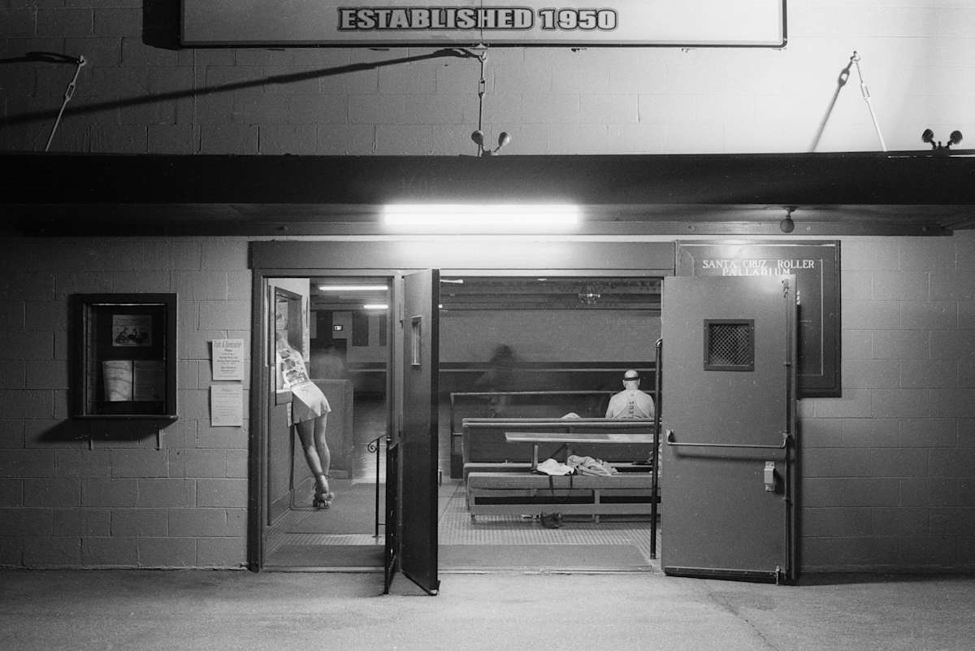

Another grouping appears to be images in memoriam, ranging across recalling specific people or places now from points past or far away.

One more grouping includes a combination, if not juxtaposition, of people as portraits or as icons, bringing a sense of role-playing being as meaningful as any other presentation of identity.

And finally for now, there is a generous supply of collage, montage and mixed media, poetic inventions of the scene


Thanks to OPW’s production team, the gallery show of 50 works easily facilitates doing one’s own curating as well, an exercise made even more inviting by all 80 selections being together online: https://www.ebpco.org/exhibitions/online/in-focus. Numerous entries there include notes by the artist, bringing more clarity to the motivations and meanings behind the work.
Prompted by those, and by the demonstration of Liggin's installation at OPW, we are further inspired to browse the works in many different ways, exploring how photography can document, question, connect, and inspire.
[All images above: copyright of their respective artists.]


Comments